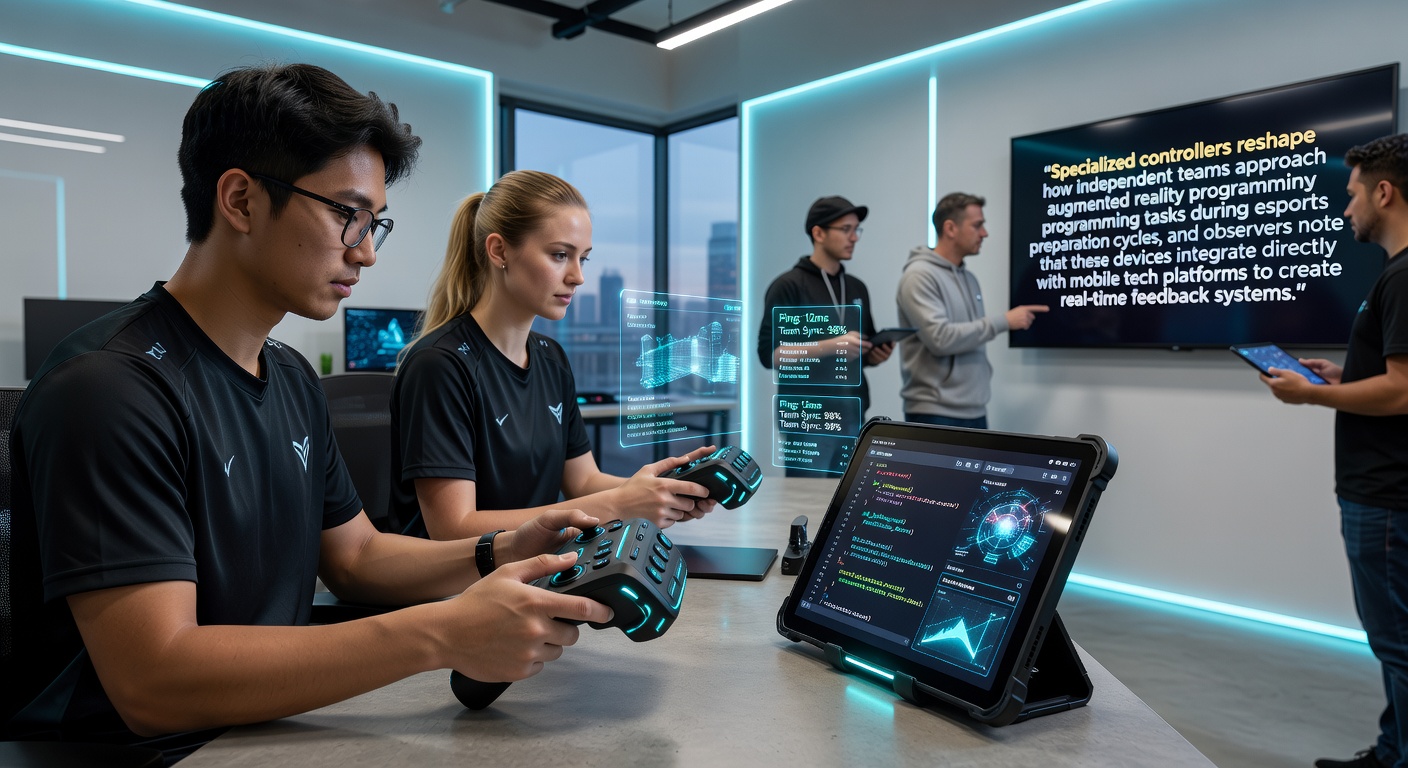
Augmented Reality Controllers Redefine Training Protocols for Independent Esports Collectives
Integration Patterns Emerge in Competitive AR Workflows
Specialized controllers have entered esports preparation routines for independent teams because they connect straight to mobile technology platforms and generate immediate response loops that adjust programming tasks on the fly, and researchers at institutions across North America documented these pairings in reports released during May 2026. Teams working on augmented reality code now manipulate virtual elements through hardware that reads gestures and pressure inputs while the mobile device processes spatial data and returns visual corrections without intermediate steps. Observers tracking these setups note that the direct link removes the lag once common when coders switched between separate input devices and screen-based editors.
Independent collectives preparing for tournaments have adopted these tools at higher rates since early 2025 because the hardware supports simultaneous coding and testing phases, and data compiled by the Entertainment Software Association shows participation in AR-focused training programs rose 27 percent among non-sponsored groups. The controllers handle calibration for headsets and mobile sensors at the same time so programmers receive tactile cues when virtual objects drift out of alignment or when latency spikes occur in simulated match environments.
Real-Time Feedback Mechanisms in Action
These devices feed sensor readings back into mobile applications that overlay performance metrics onto live AR scenes, which allows squads to tweak algorithms while practice drills continue rather than pausing to review logs later. Engineers who tested prototypes at university labs in Australia reported that feedback cycles shortened from minutes to seconds once controllers synced through standard wireless protocols already present on most smartphones. Squad members therefore iterate on positioning logic or collision detection routines while opponents move through the same shared space, creating tighter preparation loops that mirror actual competition conditions.
One documented workflow involves a controller mounted with pressure-sensitive pads that register finger placement while the mobile platform streams positional data to a central team dashboard, and this combination has helped smaller groups identify coordination errors that previously surfaced only during post-session analysis. Figures released by the Canadian Interactive Digital Entertainment Association indicate that teams using integrated hardware cut preparation time by an average of 18 percent compared with those relying on conventional input methods alone.
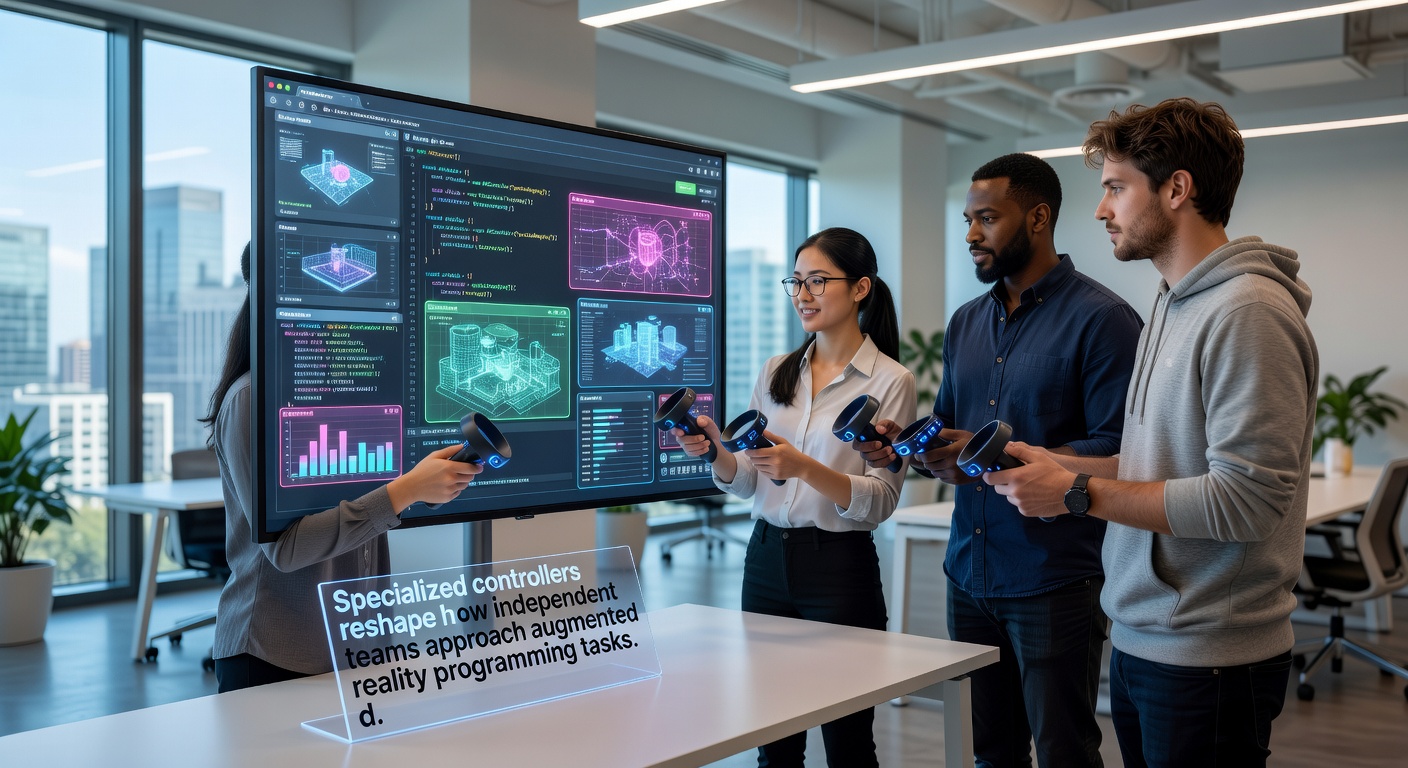
Programming tasks that once demanded separate simulation software now run inside the same mobile session because the controller transmits raw movement data directly to the device’s graphics pipeline, and this streamlines how teams rehearse defensive positioning or objective capture sequences. Observers have recorded instances where coders adjusted object physics parameters mid-drill after receiving vibration alerts that signaled misalignment, a process that keeps the entire group inside the flow of practice rather than breaking concentration to consult external monitors.
Hardware Adoption Across Regional Scenes
European esports organizations began distributing controller kits to member squads in late 2025 after pilot programs demonstrated measurable gains in task completion speed, while similar rollouts appeared in Asian training centers during the same period. Mobile platforms already carry the processing power needed to run both the AR environment and the feedback overlay so teams avoid purchasing additional computers or servers for daily drills. Industry reports compiled by the International Game Developers Association highlight that controller firmware updates released in March 2026 expanded compatibility with five additional smartphone models, broadening access for collectives that operate on limited budgets.
Training cycles now incorporate repeated micro-adjustments because the hardware loop stays open throughout each session, and programmers receive confirmation when code changes produce the intended spatial result. This pattern has proven especially useful for squads that rotate members between coding and in-game roles since everyone views the same real-time data on their paired devices without needing to export files or reconfigure setups between shifts.
Future Trajectories for Mobile-AR Esports Hardware
Developers continue refining sensor arrays that capture finer hand movements while maintaining low power draw on the connected mobile device, and early field tests conducted through partnerships with academic labs suggest further reductions in latency are achievable within the next hardware generation. Independent teams that track these developments through open documentation channels gain early insight into firmware changes that affect programming accuracy, which keeps preparation methods aligned with evolving platform capabilities.
Observers tracking adoption rates note that controller shipments to grassroots esports programs increased steadily through the first half of 2026, reflecting broader recognition that direct mobile integration supports more efficient rehearsal of complex AR scenarios. The same feedback architecture that assists coding tasks also logs movement patterns for later review, giving teams a single source of performance data that spans both technical and tactical elements of competition.
Conclusion
Specialized controllers paired with mobile platforms have established new routines for independent esports teams handling augmented reality programming, and the real-time loops they create allow continuous refinement during preparation cycles. Regional associations and research groups continue monitoring how these integrations scale across different hardware ecosystems, while teams themselves focus on extracting maximum value from the immediate feedback the devices supply. Continued firmware and sensor improvements scheduled for later in 2026 are expected to maintain the momentum observed since the start of the year.