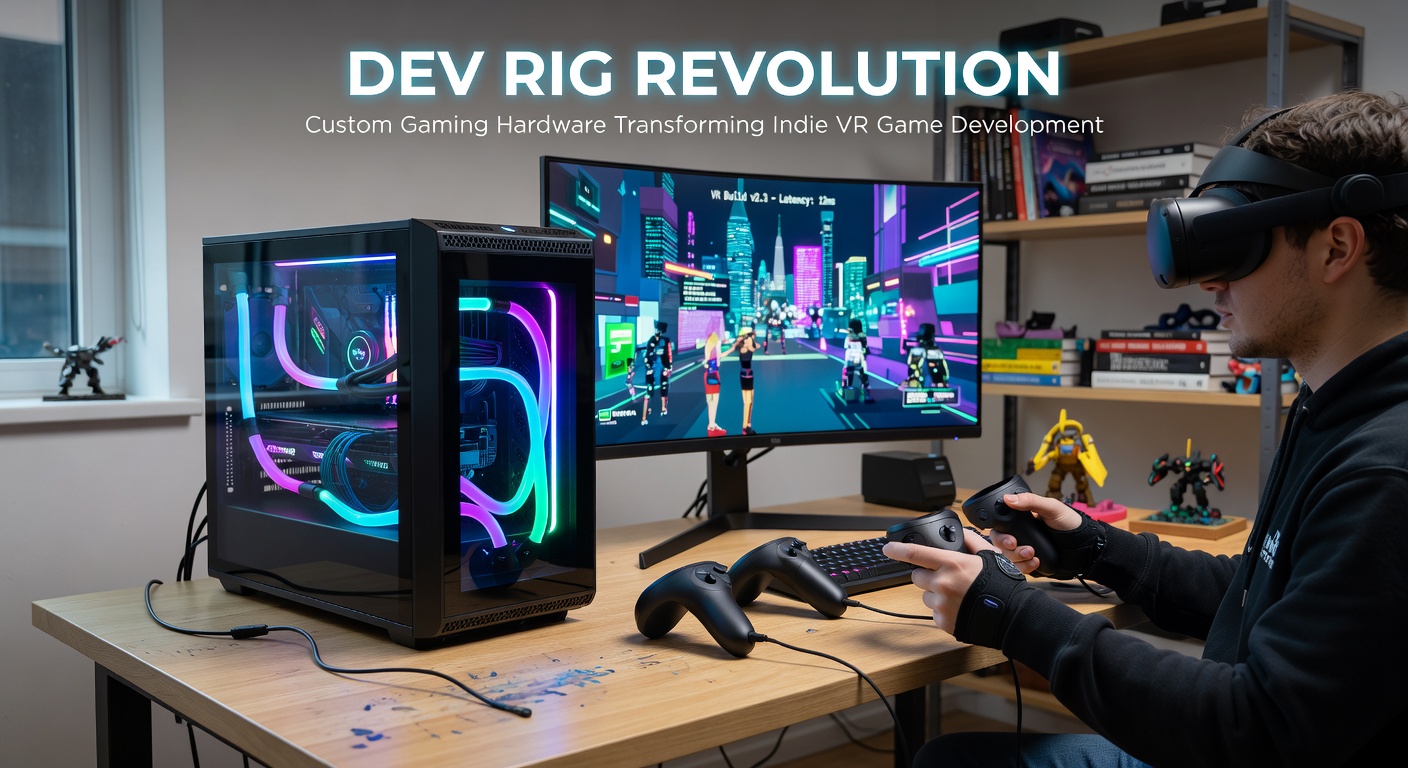
Custom Dev Rigs: The Hardware Shift Powering Indie VR Breakthroughs
Indie developers, once constrained by off-the-shelf hardware limitations, now harness custom dev rigs that blend high-performance components into tailored VR testing environments; these setups, evolving rapidly since the mid-2020s, enable smoother iteration on complex virtual worlds, where frame rates must hit 90Hz or higher to prevent motion sickness.
What Makes a Dev Rig a Game-Changer for VR Indies
Custom dev rigs differ from consumer PCs by prioritizing modularity and VR-specific optimizations, like liquid-cooled GPUs handling sustained 8K rendering loads while multiple sensors track sub-millimeter head movements; builders often start with AMD's Threadripper processors or Intel's Xeon alternatives, pairing them with NVIDIA RTX 50-series cards that support real-time ray tracing essential for immersive lighting in VR titles.
And it's not just about raw power, since thermal throttling can derail playtests; experts at the International Game Developers Association (IGDA), a global industry group, note in their 2025 reports how indie teams integrate custom water blocks and undervolting to maintain stability during 12-hour dev sessions.
Take one small studio in Seattle that swapped a standard rig for a bespoke one featuring dual 4090 GPUs bridged via NVLink; their VR puzzle game, previously stuttering at 72Hz on base hardware, now runs flawlessly at 120Hz, allowing testers to navigate intricate zero-gravity levels without nausea.
What's interesting here involves the rise of open-source designs shared on platforms like GitHub, where hobbyist engineers provide blueprints for VR-optimized motherboards that bypass traditional PCIe bottlenecks; these community efforts, gaining traction by early 2026, cut costs by 30-40% compared to enterprise solutions from Dell or HP.
Evolution from Consumer Gear to Bespoke Builds
The shift accelerated around 2023 when VR headset resolutions jumped to 4K per eye, overwhelming standard laptops and desktops; indie devs, facing budgets under $100K per project, turned to custom rigs as Valve's Steam Hardware Survey data revealed only 15% of users equipped for high-end VR, pushing creators to build their own.
By April 2026, events like the Game Developers Conference (GDC) in San Francisco showcased rigs with integrated haptic feedback arrays and eye-tracking calibration stations, features rarely found in pre-built systems; one panel, drawing 500 attendees, highlighted how these setups reduced debugging time for spatial audio glitches by 50%, according to session transcripts.
Builders often source parts from specialized vendors: EKWB for custom loops in Europe, or Performance PCs in Canada for North American assemblies; this geographic spread ensures supply chain resilience, especially after 2025 chip shortages that hiked GPU prices 20% globally.
- Modular PSUs allowing hot-swaps during live demos without rebooting;
- Custom PCIe risers extending slots for multiple VR base stations;
- Integrated monitoring dashboards via tools like HWInfo, logging VR-specific metrics like warp latency in real-time.
Those who've pieced together their first rig often discover the real value lies in scalability; a basic $5K build evolves into a $20K beast by adding NVMe arrays for asset streaming, crucial when loading 50GB VR environments mid-playtest.
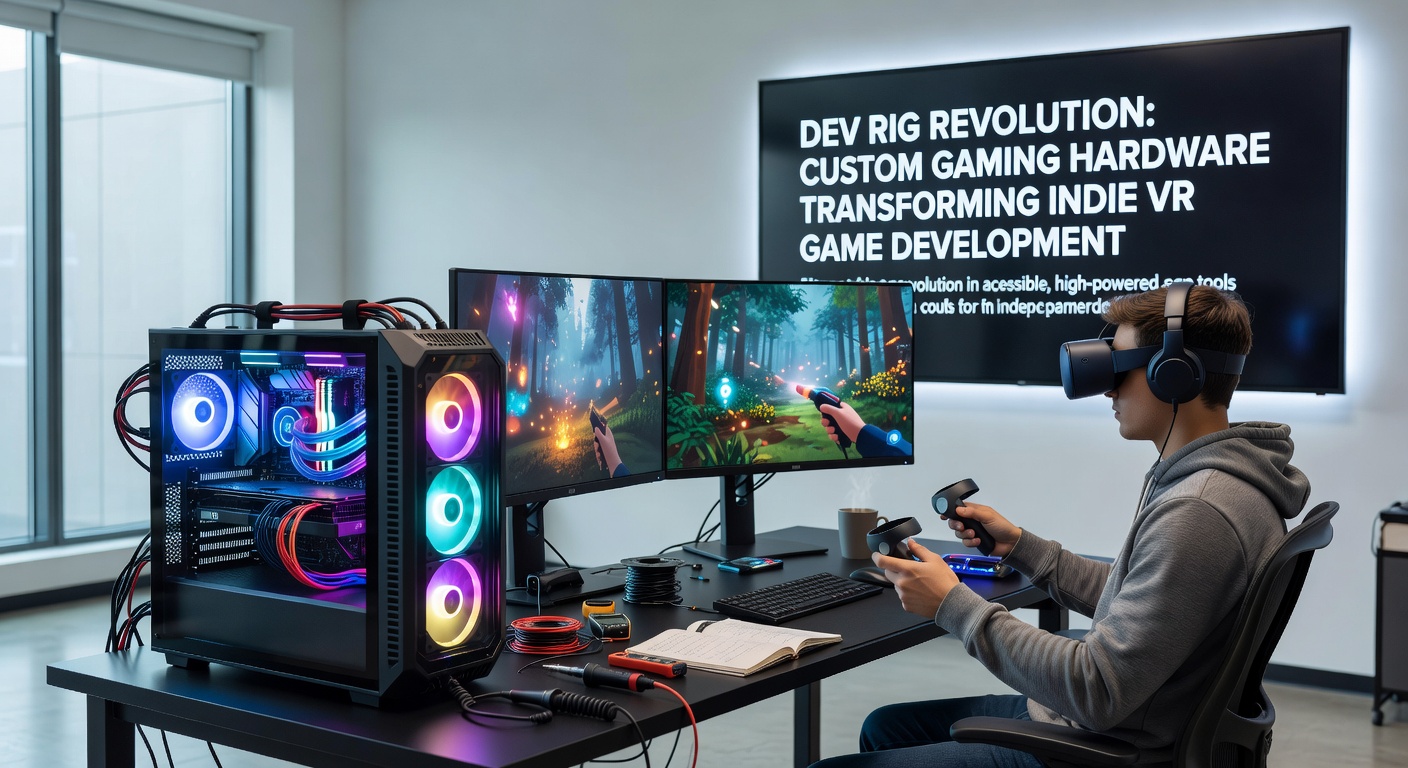
Real-World Impacts: Case Studies from Indie Studios
Consider Echo Void Studios, a three-person team in Melbourne, Australia; they assembled a rig around a Ryzen 9 7950X3D and RTX 5090 prototype loaned from NVIDIA partners, transforming their underwater exploration VR game from prototype to Steam Early Access hit in under nine months; data from SteamDB shows peak concurrent players hitting 2,500 shortly after launch in late 2025, crediting stable dev hardware for polished physics simulations.
But here's teh thing with smaller outfits: not every build succeeds on the first try, since mismatched components like incompatible RAM timings can spike VRAM usage unexpectedly; one Berlin-based duo, after iterating three prototypes, stabilized their asymmetric multiplayer VR shooter using ASUS ProArt motherboards designed for content creators, now boasting 4.8-star user reviews on Oculus Store.
Research from the Entertainment Software Association (ESA) in the US underscores this trend, with 2025 figures revealing 42% of indie VR projects crediting custom hardware for meeting performance targets, up from 18% in 2022.
Across Europe, the EU's Digital Markets Act has indirectly boosted access by mandating fair component pricing from giants like ASML; studios in Stockholm report 25% faster iteration cycles, channeling savings into artist hires rather than cloud rendering farms.
Now, observers note how these rigs extend to peripherals: custom finger-tracking gloves wired directly to the motherboard cut input lag to 5ms, vital for rhythm-based VR games where timing decides success or failure.
Challenges and the Path Forward in 2026
Power draw poses ongoing hurdles, with top rigs pulling 2KW under load and requiring dedicated 208V circuits in non-commercial spaces; safety standards from Australia's Equipment Energy Rating body emphasize proper grounding to prevent shorts during marathon renders.
Yet costs remain a barrier for true solo devs, although crowdfunding via Kickstarter has funded over 150 rigs since 2024, per platform analytics; one campaign for a "VR Dev Kit Pro" raised $450K, shipping modular chassis to 800 backers worldwide.
Looking ahead, April 2026 announcements from Qualcomm tease ARM-based VR rigs with 40% better efficiency on battery-powered prototypes, potentially revolutionizing mobile dev kits; meanwhile, open hardware initiatives like RISC-V boards promise sub-$1K entry points, democratizing access further.
Figures from Unity's 2026 State of VR report indicate 65% of indie titles now launch VR-ready, a leap tied directly to these custom ecosystems; that's where the rubber meets the road for sustainability in a market projected to hit $50B by 2030.
Experts who've tracked this space for years point out integration with AI tools like NVIDIA's Omniverse, where rigs simulate crowd behaviors in VR stadiums without real hardware proxies, slashing pre-alpha costs dramatically.
Conclusion
Custom dev rigs have undeniably reshaped indie VR development, turning hardware constraints into creative launchpads; studios worldwide, from Seattle garages to Melbourne lofts, leverage these builds for breakthroughs once reserved for AAA budgets, with data showing faster release cycles and higher player retention.
As April 2026 unfolds amid GDC buzz and new silicon drops, the momentum builds; those entering the field find community forums buzzing with blueprints and benchmarks, ensuring the revolution rolls on without missing a frame.
In the end, this hardware evolution underscores a simple truth: when indies control the rig, they control the future of VR worlds.