Haptic Networks Shape Decision Timing in Laptop Coding Competitions
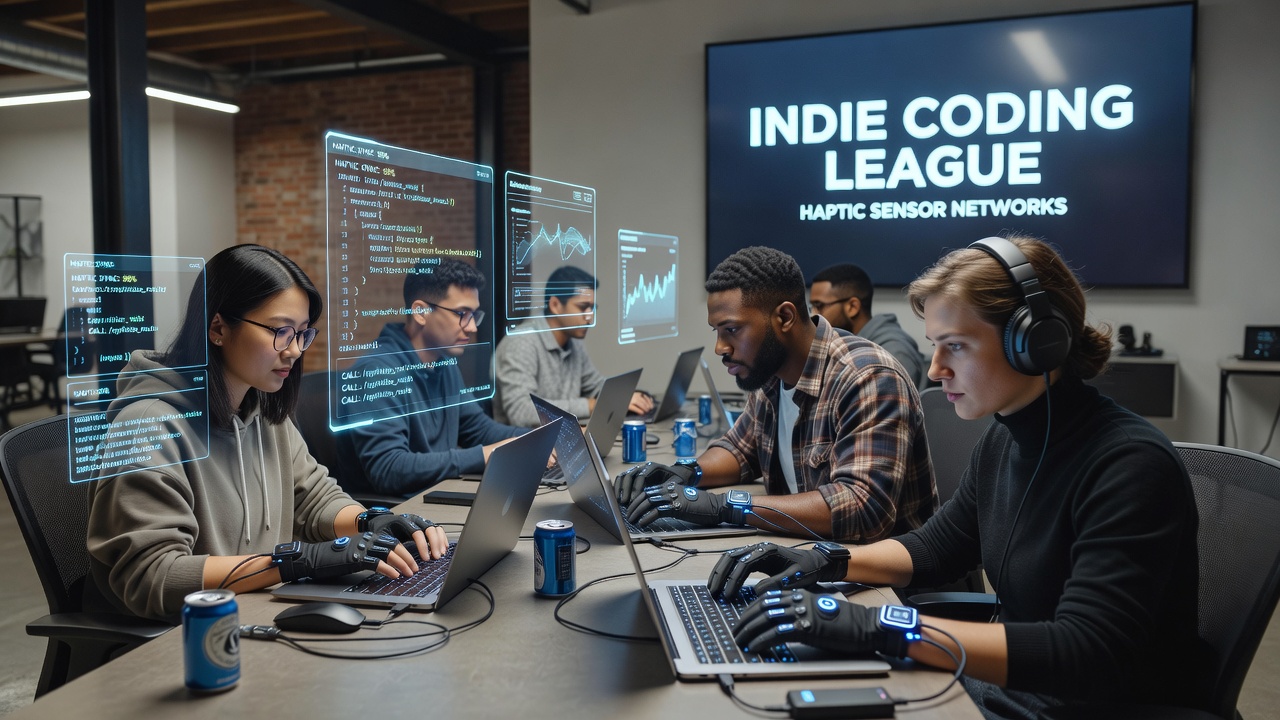
Indie laptop-based coding leagues have integrated haptic sensor networks that deliver tactile signals to participants during live competitions, and these systems transmit vibration patterns directly through device frames to indicate optimal timing for code submissions or team adjustments. Data from recent tournaments shows response windows shrinking to under 800 milliseconds when haptic cues align with visual displays, according to performance logs compiled by event organizers.
Core Components of the Sensor Setup
Each competition laptop carries a grid of micro-actuators positioned along the palm rests and keyboard base, while these actuators receive input from a central mesh that monitors network latency, teammate cursor movements, and incoming test case results in real time. Researchers at the University of Melbourne documented how the mesh processes positional data from up to eight connected devices simultaneously, converting that information into distinct pulse sequences that participants learn to interpret without breaking focus on their screens.
Calibration routines run before every match, and they map individual sensitivity thresholds so that stronger signals reach players who favor higher vibration intensity while softer pulses serve those who prefer minimal distraction. Equipment logs from the 2025 season indicate average setup time per station dropped to four minutes after standardized firmware updates rolled out across participating leagues.
Guiding Split-Second Calls During Matches
Teams face constant pressure to decide whether to commit a code revision or request an extension within narrow time slots, and the haptic layer supplies an additional channel that bypasses crowded chat overlays. A short double pulse might signal that a teammate has flagged a syntax conflict, whereas a sustained low-frequency rumble indicates the test server queue has cleared and submission is viable. Observers note that players who trained with these cues reduced erroneous commits by measurable margins during regional qualifiers held throughout spring 2026.
Coaches review post-match telemetry that timestamps every haptic trigger against actual keystroke logs, and this analysis reveals clusters where vibration guidance coincided with successful recoveries from near-fail states. One documented sequence from a May 2026 event showed a four-person squad correcting a memory allocation error after receiving a rapid triple pulse, completing the fix 1.2 seconds before the round timer expired.
League Infrastructure and Data Flow
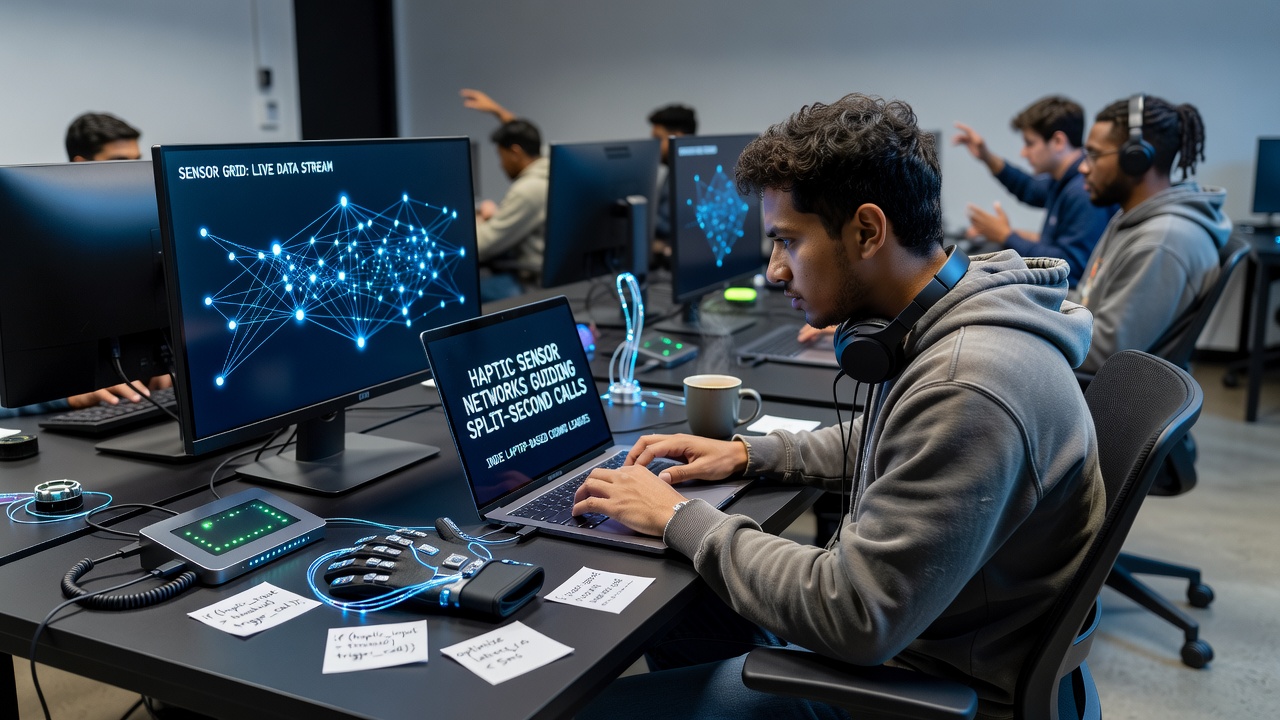
Matches run on closed local networks that prioritize deterministic packet delivery, and the same backbone carries both code traffic and haptic command packets to maintain synchronization. Event technicians monitor signal integrity through dedicated dashboards that flag any drift exceeding 15 milliseconds, because even small offsets can erode the advantage these networks provide. Industry reports from the Canadian Interactive Digital Alliance highlight how similar timing standards have been adopted in three additional regional circuits since late 2025.
Power draw remains modest because the actuators operate in short bursts rather than continuous output, yet battery monitoring protocols still enforce a 12 percent reserve threshold before each new round begins. Teams that exceed this limit receive an automatic system warning delivered through the same haptic channel, prompting them to adjust strategy without verbal communication that might distract nearby competitors.
Training Protocols and Skill Acquisition
Participants undergo progressive familiarization sessions that start with simple binary signals and advance to layered patterns representing multiple variables at once, and league data indicates most competitors reach functional proficiency after six to eight hours of cumulative practice. European coding collectives have published open training modules that pair recorded match footage with overlaid haptic timelines, allowing remote learners to simulate the experience using consumer-grade rumble packs.
Performance comparisons between haptic-trained squads and control groups show faster consensus formation during collaborative debugging segments, though individual variation remains high depending on prior gaming experience with force-feedback peripherals. June 2026 qualifiers introduced an optional advanced tier where custom pulse libraries could be uploaded, provided they passed compatibility checks administered by neutral technical staff.
Conclusion
Haptic sensor networks continue to embed themselves into the operational fabric of indie laptop coding events by supplying a parallel information pathway that supports rapid collective decisions. Continued refinement of actuator density and signal encoding will likely determine how deeply these systems influence future tournament structures and participant preparation methods.