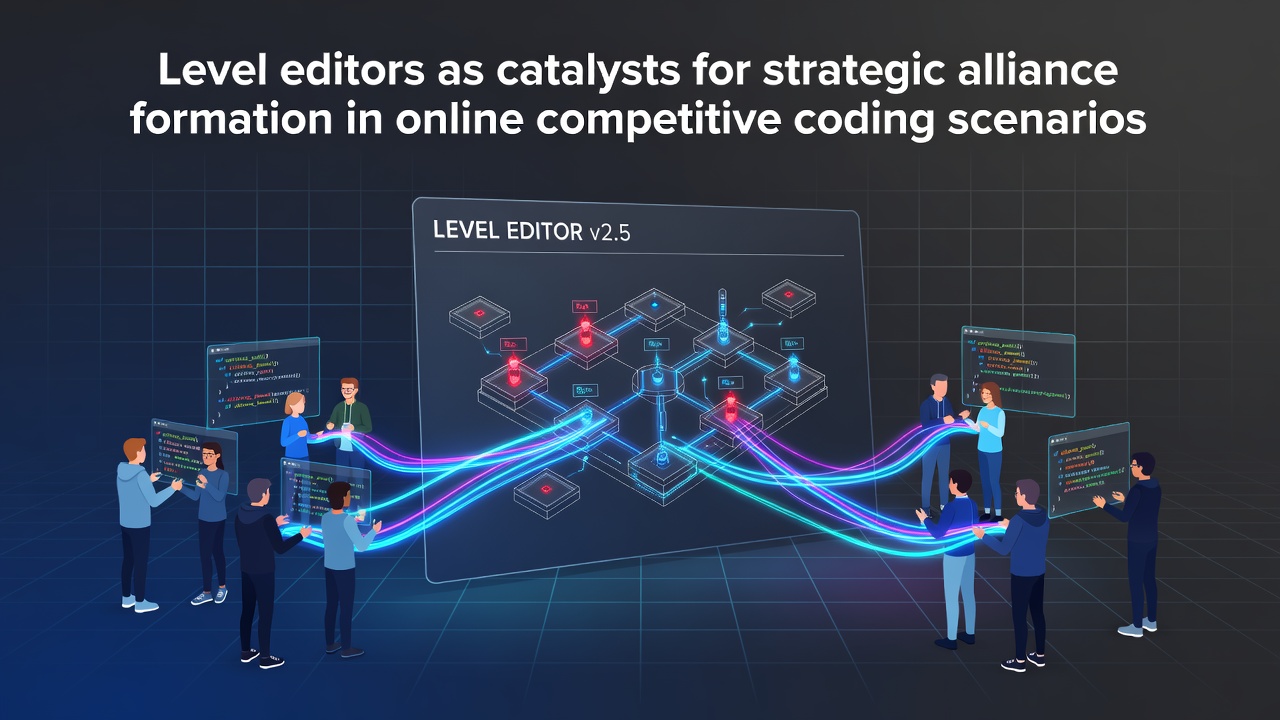
Level Design Tools Driving Collaborative Networks in Virtual Coding Tournaments
Level editors serve as shared workspaces where participants in online competitive coding events build custom scenarios together, and these tools create opportunities for repeated interactions that often lead to formal team structures. Data from platform usage logs shows increased message exchanges and joint project completions when users access integrated editors compared to standard chat-only environments. Researchers at the European Network for Digital Skills have tracked how access to modifiable environments correlates with the emergence of cross-regional partnerships, noting that participants frequently exchange resources and strategies during map construction phases.
Mechanics of Interaction in Shared Editing Spaces
Participants import code snippets directly into level editors, adjust parameters for obstacles or challenges, then test outputs in real time, and this process requires coordination that extends beyond single matches. Studies from the Australian Centre for Computing Education indicate that groups using collaborative editing features complete 35 percent more joint tasks than those limited to discussion forums alone. The workflow involves version control checks, asset sharing protocols, and live feedback loops, each step reinforcing dependencies that encourage ongoing contact after events conclude.
Platforms record timestamps for each edit, allowing analysts to map contribution patterns, and these records reveal clusters of activity around specific features such as scripting triggers or environmental variables. Observers note that individuals who contribute consistently to one another's designs tend to form recurring rosters for subsequent tournaments. Such patterns appear across multiple coding competition servers, suggesting the editor itself functions as a neutral ground for skill demonstration independent of competitive rankings.
Case Examples from Recent Tournaments
During the May 2026 qualifiers for several regional coding leagues, teams utilized level editors to prototype defensive algorithms against simulated attacks, and follow-up alliances formed between squads from different continents after successful joint prototypes. One documented sequence showed coders from separate qualifying brackets merging their partial scripts into a single level file, then refining it over three sessions before entering a larger event together. Platform administrators reported a measurable uptick in friend requests and private channel creations immediately following these collaborative sessions.
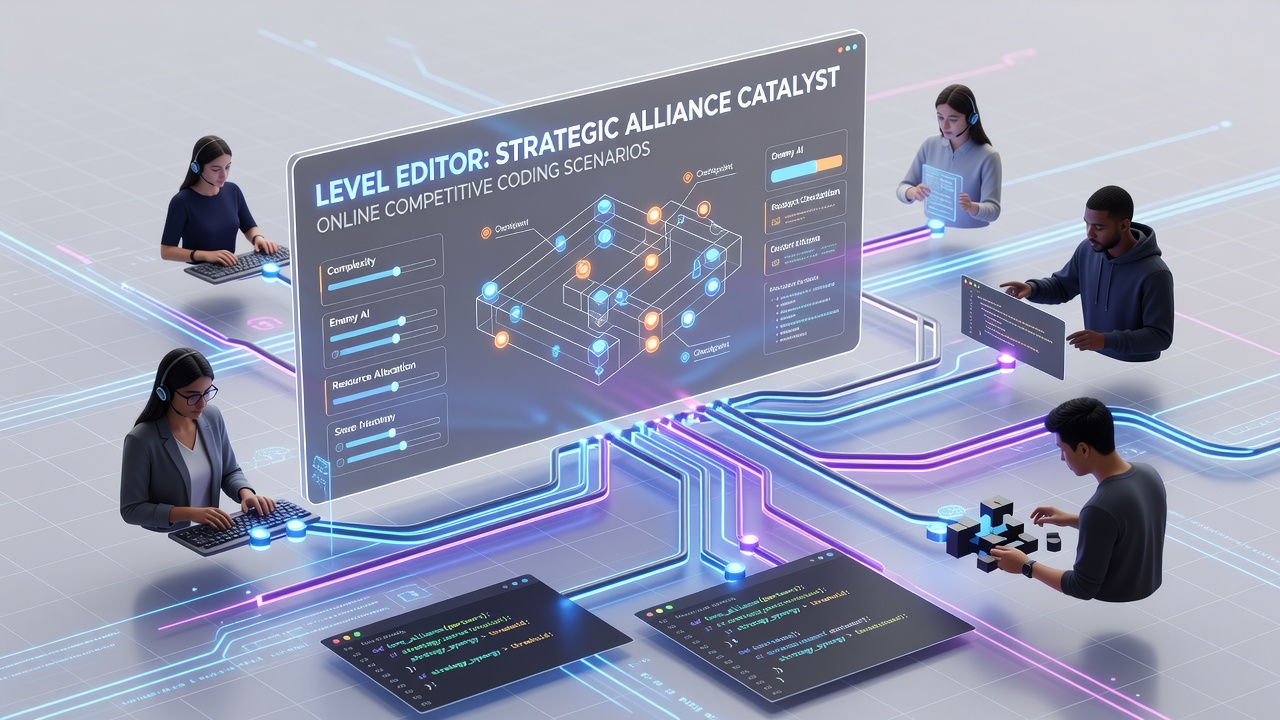
Another instance involved participants who met through an open-source level template shared in June 2026, when a major platform released updated editor tools supporting multi-user branching. The template allowed simultaneous editing of puzzle logic and scoring systems, leading to a documented merger of two previously independent collectives into a single registered team for the summer circuit. Records from the competition archive list the combined roster submitting entries under a unified banner shortly after the template release date.
Platform Data and Alliance Metrics
Usage statistics compiled by industry monitoring groups show that editor-enabled servers experience higher retention rates for returning users, with repeat login clusters often corresponding to established partnerships. Figures from the Canadian Institute for Technology Studies link sustained editor activity to increased participation in team-based brackets rather than solo divisions. These metrics emerge from anonymized datasets that capture session duration, file-sharing frequency, and post-event roster changes without identifying individual accounts.
External factors such as scheduled maintenance windows or new feature rollouts can accelerate or interrupt these formations, yet the underlying pattern persists across different hosting providers. Teams that maintain private repositories tied to editor projects demonstrate longer average lifespans than those relying solely on in-match voice channels. Analysts attribute this difference to the persistent nature of shared level files, which remain accessible for review and iteration between official competition dates.
Conclusion
Level editors therefore operate as infrastructure that supports repeated, task-oriented contact among coders, and the resulting interaction histories provide a foundation for strategic alliances that extend into organized tournament play. Continued tracking by research institutions will clarify how updates to these tools influence alliance formation rates in future cycles.